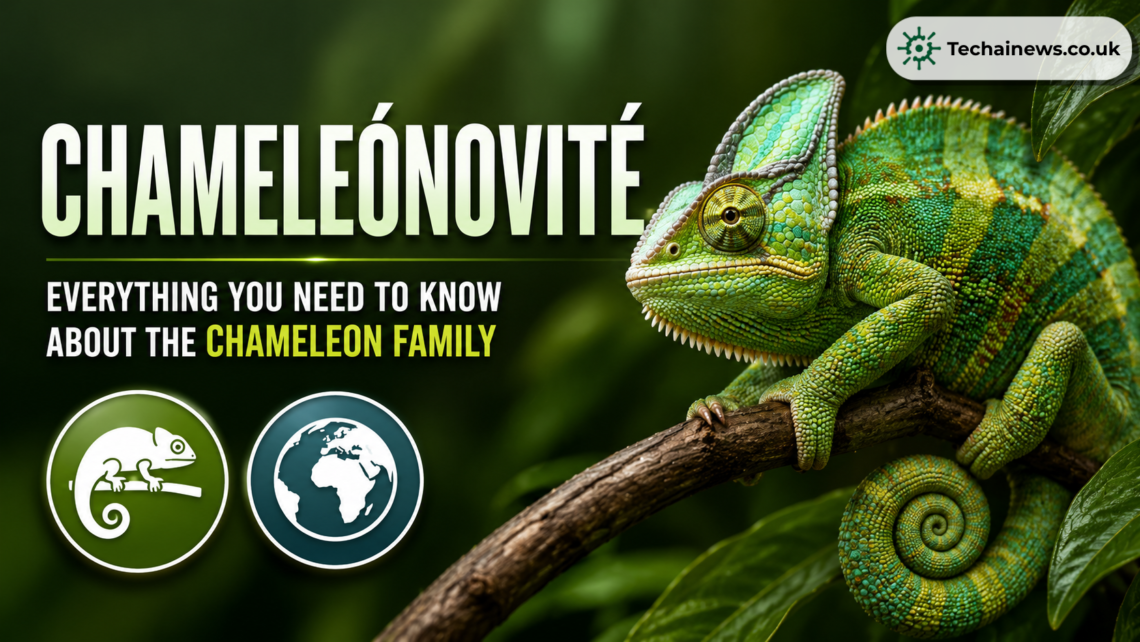
Chameleónovité: Everything You Need to Know About the Chameleon Family
Introduction
The word “chameleónovité” refers to the chameleon family, a unique group of reptiles known for their color-changing ability, independently moving eyes, long sticky tongues, and slow, careful movements. While many people recognize chameleons from nature documentaries or zoos, there is much more to these fascinating animals than their changing colors.
Chameleons belong to one of the most specialized reptile families in the world. Their bodies have evolved to help them survive in forests, deserts, mountains, and grasslands across Africa, Madagascar, parts of Europe, the Middle East, and Asia. Every feature, from their grasping feet to their prehensile tails, serves a purpose in helping them hunt insects and avoid predators.
Many people believe chameleons change color only to blend into their surroundings. While camouflage plays a role, color changes also help them communicate, regulate body temperature, and express emotions such as stress or aggression.
Whether you are a student, wildlife enthusiast, or someone simply curious about these remarkable reptiles, this guide explains everything you need to know in simple English. You will learn about their appearance, habitat, diet, behavior, reproduction, conservation, and some surprising facts that make chameleons one of nature’s most extraordinary animals.
Search Intent Analysis
Primary Search Intent
Most users searching for “chameleónovité” want to understand what the term means and learn about the chameleon family.
Secondary Search Intent
Readers may also want to know:
- Where chameleons live
- How they change color
- What they eat
- How they hunt
- Whether they make good pets
- How many species exist
User Expectations
People expect an easy-to-understand guide that explains chameleons without using complex scientific language.
What Does Chameleónovité Mean?
“Chameleónovité” is the Slovak and Czech word for the family of chameleons. In scientific classification, this family is called Chamaeleonidae.
The family includes more than 200 recognized species, each with unique sizes, colors, and habitats.
Some species grow only a few centimeters long, while others can reach more than half a meter from head to tail.
Classification of Chameleons
| Classification | Information |
|---|---|
| Kingdom | Animalia |
| Phylum | Chordata |
| Class | Reptilia |
| Order | Squamata |
| Family | Chamaeleonidae |
This family contains a wide variety of species that have adapted to different environments over millions of years.
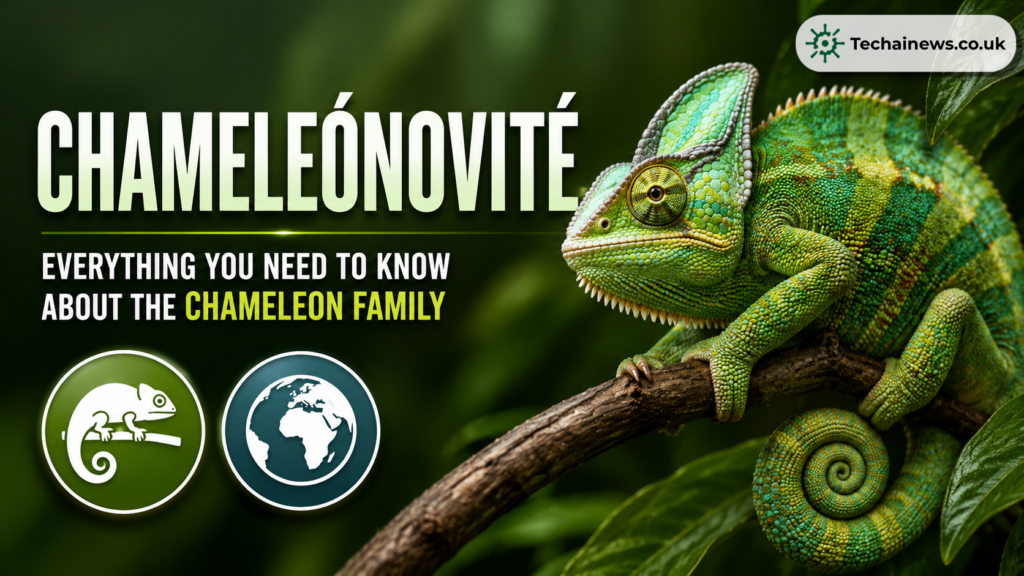
Where Do Chameleons Live?
Most chameleons live in warm climates.
Their natural habitats include:
- Tropical rainforests
- Dry forests
- Mountain regions
- Savannahs
- Shrublands
- Semi-desert areas
Madagascar is home to the greatest diversity of chameleon species. In fact, many species are found nowhere else in the world.
Other countries with native chameleons include the following:
- South Africa
- Kenya
- Tanzania
- Yemen
- Saudi Arabia
- India
- Spain
- Portugal
Some species have also been introduced into other regions.
Physical Characteristics
Chameleons have several unique features that set them apart from other reptiles.
Color Changing Skin
The most famous feature of a chameleon is its ability to change color.
Contrary to popular belief, they do not change color simply to match every background.
Instead, color changes are influenced by:
- Temperature
- Light
- Mood
- Stress
- Communication
- Health
Special skin cells called chromatophores allow them to produce different colors and patterns.
Independently Moving Eyes
A chameleon’s eyes can move in different directions at the same time.
This allows the animal to watch for predators while also searching for food.
Once prey is detected, both eyes focus on the target to judge distance accurately.
Long Sticky Tongue
The tongue of a chameleon is one of the fastest structures in the animal kingdom.
It can extend farther than the animal’s own body length and capture insects within a fraction of a second.
Grasping Feet
Their feet are specially designed to grip branches securely.
This helps them move safely through trees without losing balance.
Prehensile Tail
Most tree-dwelling chameleons have a strong tail that wraps around branches for extra support.
The tail acts like an additional hand while climbing.
What Do Chameleons Eat?
Chameleons are mainly insect-eating reptiles.
Their diet often includes:
- Crickets
- Grasshoppers
- Beetles
- Flies
- Moths
- Caterpillars
- Spiders
Larger species may occasionally eat:
- Small birds
- Small reptiles
- Tiny mammals
Pet chameleons are usually fed insects that have been properly supplemented with vitamins and minerals to maintain good health.
How Do Chameleons Hunt?
Unlike many reptiles that actively chase prey, chameleons prefer a patient hunting strategy.
They remain almost motionless while carefully observing their surroundings.
When an insect comes within range, the chameleon launches its tongue at incredible speed. The sticky tip captures the prey, and the tongue retracts almost instantly.
This hunting method allows chameleons to conserve energy while maintaining a high success rate.
How Do Chameleons Change Color?
The process is much more advanced than many people realize.
Their skin contains several layers of specialized cells.
These cells reflect and absorb light differently depending on how they are arranged.
By changing the spacing within these cells, chameleons can display shades of the following:
- Green
- Yellow
- Blue
- Brown
- Black
- White
- Orange
- Red
The exact colors vary by species.
Some species can display brilliant patterns, while others remain relatively dull throughout their lives.
Behavior and Lifestyle
Chameleons are generally solitary animals.
Most adults prefer living alone and only interact during the breeding season.
Their slow movements help them remain unnoticed by predators while conserving energy.
Although they appear calm, they can become defensive if threatened, often changing color, inflating their bodies, or opening their mouths to appear larger.
Reproduction and Life Cycle
Most chameleons reproduce by laying eggs, although a few species give birth to live young.
During the breeding season, males often display brighter colors to attract females. If two males compete for the same female, they may change colors, puff up their bodies, and perform display behaviors to appear stronger. Physical fights are uncommon because visual displays usually determine the winner.
After mating, female chameleons dig a hole in the soil where they lay their eggs. Depending on the species, a female may lay anywhere from 10 to more than 80 eggs.
The incubation period also varies. Some eggs hatch after four or five months, while others may take almost a year.
Baby chameleons are fully independent from the moment they hatch. They do not receive parental care and must immediately find food and avoid predators.
Natural Predators
Although chameleons are skilled at hiding, they still face many natural enemies.
Common predators include:
- Birds of prey
- Snakes
- Larger lizards
- Small mammals
- Monkeys in some regions
Their camouflage, slow movement, and ability to remain motionless help reduce the risk of being seen.
Different Types of Chameleons
There are more than 200 known species of chameleons. Some of the best-known include the following:
Panther Chameleon
Known for its bright blue, green, orange, and red colors, the Panther Chameleon is native to Madagascar and is one of the most colorful species.
Veiled Chameleon
This species is recognized by the large casque, or helmet-like structure, on its head. It is commonly kept as a pet because of its adaptability.
Jackson’s Chameleon
Jackson’s Chameleon is famous for the three horn-like projections on the male’s head. It naturally occurs in East Africa but has also established populations in Hawaii.
Pygmy Chameleons
These tiny species live close to the forest floor and often measure only a few centimeters in length.
Chameleons as Pets
Many reptile enthusiasts keep chameleons as pets, but they are not ideal for beginners.
They require:
- Proper lighting
- UVB exposure
- Controlled humidity
- Correct temperature
- Live insects
- Spacious enclosures with climbing branches
Unlike some reptiles, chameleons generally do not enjoy frequent handling. Excessive handling can cause stress and negatively affect their health.
Anyone considering a pet chameleon should research the species carefully before bringing one home.
Conservation Status
Many chameleon species face growing threats in the wild.
Some of the biggest challenges include:
- Habitat destruction
- Deforestation
- Climate change
- Illegal wildlife trade
- Agricultural expansion
Several species are now considered threatened or endangered because their natural habitats continue to shrink.
Conservation organizations work with governments and local communities to protect forests, reduce illegal collection, and promote responsible captive breeding programs.
Interesting Facts About Chameleons
Chameleons have many unique abilities that make them different from other reptiles.
- Their tongue can extend farther than their own body.
- Their eyes can move independently.
- They have excellent depth perception.
- Most species spend much of their lives in trees.
- They rarely chase prey and instead wait patiently before striking.
- Their feet are specially adapted for gripping branches.
- Color changes help with communication as well as camouflage.
- Some species are among the smallest reptiles in the world.
Common Myths About Chameleons
Many popular beliefs about chameleons are incorrect.
| Myth | Fact |
|---|---|
| Chameleons change color only for camouflage. | They also change color because of temperature, communication, stress, and mood. |
| Every chameleon can become any color. | Each species has a limited range of colors. |
| Chameleons are dangerous to humans. | They are harmless and prefer to avoid confrontation. |
| They survive only in rainforests. | Different species live in forests, mountains, grasslands, and dry regions. |
Understanding these facts helps people appreciate how remarkable these reptiles truly are.
Why Chameleons Are Important
Chameleons play an important role in maintaining healthy ecosystems.
By feeding on insects, they help control insect populations naturally. They also form part of the food chain, serving as prey for larger animals.
Their presence often indicates a healthy environment because many species are sensitive to habitat changes.
Protecting chameleons also helps protect the forests and ecosystems where countless other plants and animals live.
Expert Analysis
Chameleons represent one of evolution’s most specialized reptile groups. Every feature of their body has developed to improve survival in their environment.
Their independently moving eyes allow them to scan for both predators and prey without moving their heads. Their long tongue lets them catch insects from a safe distance. Their grasping feet and prehensile tail make climbing through trees easier and more secure.
Color change, often misunderstood, is perhaps their most sophisticated adaptation. It is not simply about hiding. It is also a way to communicate with rivals, attract mates, regulate body temperature, and respond to environmental conditions.
Scientists continue studying chameleons because their unique skin structures, vision, and movement provide valuable insights into biology, evolution, and even materials science.
Tips for Learning More About Chameleons
If you want to explore this fascinating reptile family further, consider these suggestions.
- Watch documentaries produced by trusted wildlife organizations.
- Visit accredited zoos that care for chameleons.
- Read books written by reptile experts.
- Learn about conservation efforts in Madagascar and Africa.
- Support organizations working to protect endangered reptiles.
Quick Summary Table
| Topic | Key Information |
|---|---|
| Scientific Family | Chamaeleonidae |
| Number of Species | More than 200 |
| Main Diet | Insects |
| Main Habitat | Forests, grasslands, mountains, and shrublands |
| Famous Ability | Color-changing skin |
| Special Features | Independent eyes, long tongue, gripping feet, prehensile tail |
| Distribution | Africa, Madagascar, parts of Europe, the Middle East, and Asia |
Frequently Asked Questions
What does “chameleónovité” mean?
“Chameleónovité” is the Slovak and Czech word for the chameleon family, scientifically known as Chamaeleonidae.
Why do chameleons change color?
They change color for communication, temperature regulation, camouflage, stress response, and attracting mates.
Where do most chameleons live?
Most species live in Africa and Madagascar, although some are also found in parts of Europe, the Middle East, and Asia.
What do chameleons eat?
Their diet mainly consists of insects such as crickets, grasshoppers, flies, beetles, and spiders. Larger species may occasionally eat small vertebrates.
Can chameleons move both eyes separately?
Yes. Their eyes can move independently, allowing them to observe different areas at the same time.
Are chameleons good pets?
Some species can be kept as pets, but they require specialized care, making them better suited for experienced reptile keepers.
How many species of chameleons exist?
Scientists currently recognize more than 200 species, although new discoveries and taxonomic updates continue to refine this number.
Are chameleons endangered?
Some species are threatened because of habitat loss, climate change, and illegal wildlife trade, while others remain relatively common.
Final Thoughts
Chameleónovité, or the chameleon family, includes some of the most fascinating reptiles on Earth. Their remarkable vision, color-changing ability, specialized feet, powerful tongue, and tree-climbing skills have made them a favorite subject for scientists and nature enthusiasts alike.
Beyond their unique appearance, chameleons play an important role in maintaining healthy ecosystems by controlling insect populations and contributing to biodiversity. Their survival depends on protecting the forests and habitats they call home.
Whether you wanted to understand the meaning of the word “chameleónovité,” learn how chameleons change color, or discover where these reptiles live, this guide provides a complete introduction in simple English. As research continues, these extraordinary animals will remain one of nature’s most impressive examples of adaptation and evolution.
Chameleons Compared to Other Lizards
Although chameleons belong to the lizard group, they are very different from most other species. Their unique adaptations make them one of the most specialized reptiles on Earth.
| Feature | Chameleons | Most Other Lizards |
|---|---|---|
| Eye Movement | Eyes move independently | Eyes move together |
| Tongue | Extremely long and sticky | Shorter tongue |
| Feet | Specialized for gripping branches | Designed for walking or climbing |
| Tail | Many species have a prehensile tail | Most tails are not prehensile |
| Hunting Style | Ambush hunter | Active hunter in many species |
| Color Change | Advanced color-changing ability | Limited or no color change |
These differences allow chameleons to thrive in environments where patience, camouflage, and precision are more important than speed.
Adaptations That Help Chameleons Survive
Every part of a chameleon’s body has evolved for survival.
Excellent Vision
Chameleons have some of the best eyesight among reptiles. Their eyes can scan nearly 360 degrees, helping them detect both predators and prey without moving their heads.
Powerful Grip
Their feet are divided into groups of fused toes that create a strong grip on branches. Combined with a muscular tail, this allows them to move safely through trees.
Fast Feeding Mechanism
The tongue is powered by specialized muscles and elastic tissues. Once prey is spotted, the tongue shoots out at remarkable speed and accuracy before quickly returning to the mouth.
Camouflage and Communication
Changing color helps chameleons blend into vegetation, but it also allows them to communicate with rivals and potential mates. Bright colors often indicate confidence or aggression, while darker shades may signal stress or cooler body temperatures.
Challenges Facing Wild Chameleons
Many chameleon populations are declining because of human activity.
Habitat Loss
Forests continue to disappear because of farming, logging, and urban development. As trees are removed, many species lose the shelter and food sources they depend on.
Illegal Pet Trade
Some rare species are captured illegally and sold as exotic pets. Removing animals from the wild can reduce already small populations.
Climate Change
Changes in rainfall and temperature can affect breeding cycles, food availability, and suitable habitats.
Invasive Species
In some regions, introduced predators compete with or prey on native chameleons, making survival more difficult.
Protecting natural habitats remains one of the most effective ways to conserve these remarkable reptiles.
Can Chameleons Recognize Humans?
Research suggests that captive chameleons can become familiar with their regular caretakers. While they do not form emotional bonds in the same way as dogs or cats, many individuals learn to distinguish between people who provide food and strangers.
Even so, chameleons generally prefer minimal handling. They are observation animals rather than interactive pets, and reducing unnecessary stress is important for their health.
Fun Facts About Chameleons
Here are some fascinating facts that many people do not know.
- The smallest known chameleon species can fit comfortably on a fingertip.
- Some larger species can grow to more than 60 centimeters in length.
- Chameleons can focus both eyes on one object when preparing to catch prey.
- Their tongue can reach a target in a fraction of a second.
- Not every species is brightly colored. Some remain mostly brown or green throughout their lives.
- Madagascar is home to the largest number of chameleon species anywhere in the world.
- Chameleons shed their skin as they grow, much like other reptiles.
Why Scientists Continue to Study Chameleons
Chameleons remain an important subject of scientific research because they possess several rare biological traits.
Researchers study their skin to better understand how structural color works. Their vision provides insights into advanced visual systems, while their tongue mechanics inspire engineers designing fast-moving robotic devices.
Conservation scientists also monitor chameleon populations because changes in their numbers often reflect the health of entire ecosystems. Protecting chameleons helps preserve forests that support countless other plants and animals.
These ongoing studies continue to reveal new information about one of the most remarkable reptile families in the natural world.


One comment on “Chameleónovité Guide: All About the Chameleon Family”