Navigator Pear: The Complete Guide to This Cold-Hardy Ornamental Tree
If you have been searching for a tree that offers year-round beauty without demanding constant attention, the Navigator Pear might be exactly what you are looking for. This tree has been generating plenty of interest among homeowners and landscapers, and for good reason. It brings spring flowers, glossy summer foliage, brilliant fall color, and a tidy, upright shape that fits beautifully into almost any landscape.
But here is where things get a little confusing. When people talk about the Navigator Pear, they might be referring to one of two different trees. One is an ornamental tree grown for its beauty. The other is a fruit-bearing tree that produces edible pears. Both share the same name, but they have very different purposes.
This guide will clear up that confusion. We will explore both types of Navigator Pear, explain their differences, and give you everything you need to know about planting, caring for, and enjoying these remarkable trees.
What Is a Navigator Pear?
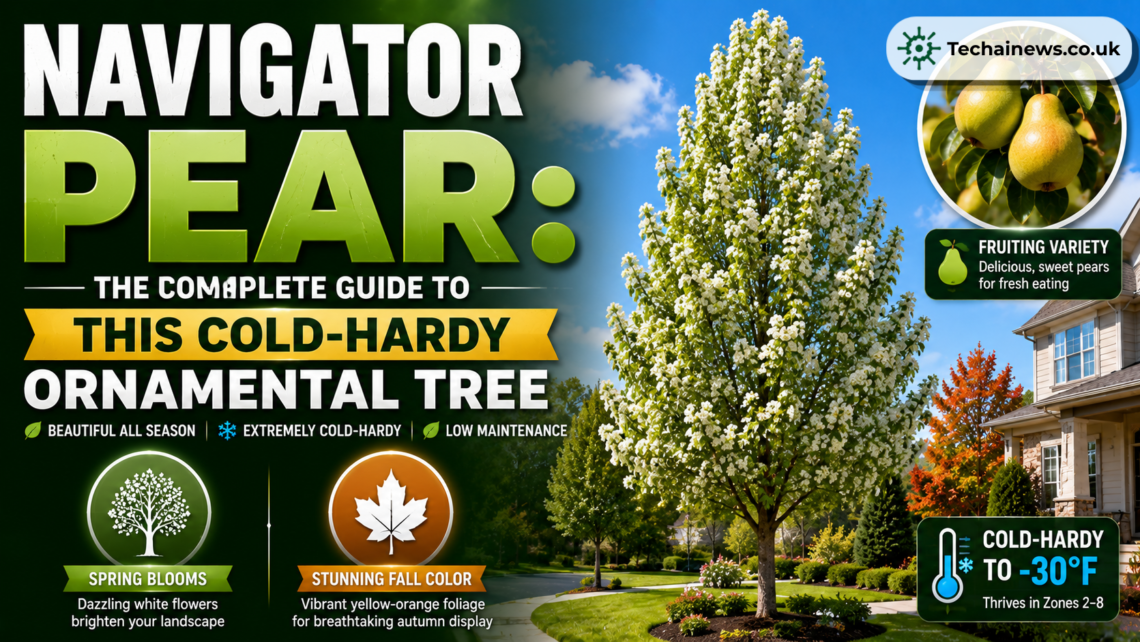
The Navigator Pear is a cold-hardy pear cultivar that has become increasingly popular in northern climates. It is known for its upright, pyramidal growth habit, glossy green leaves, white spring flowers, and striking yellow-orange fall color.
In the landscape trade, the Navigator Pear is most often sold as an ornamental tree. Its botanical name is typically listed as Pyrus x ‘DurPSN303.’ This means its main job is to look good, not to produce fruit for eating.
However, there is also a fruiting variety of Navigator Pear, sometimes listed as Pyrus communis ‘Navigator,’ which is grown for its golden-yellow, crisp, and sweet pears. This variety is less common in nurseries but is valued by home gardeners who want both beauty and a harvest.
The key difference comes down to this: the ornamental Navigator Pear is planted for its landscape value, while the fruiting Navigator Pear is planted for its edible fruit. Both are excellent choices, depending on what you want from your tree.
Origin and Development
The ornamental Navigator Pear was developed by Rick Durand and introduced by Prairie Shade Nursery. It was created specifically as a strong, cold-tolerant ornamental pear for regions where many other pear trees struggle.
The tree is an interspecific hybrid, meaning it comes from a mix of pear species. The goal was not to create a large edible fruit tree. Instead, the focus was on beauty, strength, hardiness, and a neat growth habit.
The fruiting Navigator Pear, on the other hand, traces its roots to European breeding programs aimed at producing a pear variety that could withstand environmental stress while retaining premium taste and texture.
Ornamental Navigator Pear: Features and Benefits
Size and Shape
The ornamental Navigator Pear typically reaches a mature height of 20 to 26 feet, with a spread of 10 to 13 feet. Some nurseries list the mature size closer to 35 feet tall and 18 feet wide. This variation matters when you are planting near a driveway, sidewalk, foundation, or overhead utility line.
Its narrow, upright form is one of its best features. It can fit beside driveways, near sidewalks, in front yards, along streets, and in small urban gardens where wider trees would be too large.
Spring Flowers
One of the most attractive features of the Navigator Pear is its spring bloom. In early to mid-spring, the tree produces a heavy show of bright white flowers. These blooms appear before the glossy green leaves fully emerge. In northern areas, this spring display is especially welcome because it brings color and life back into the landscape after a long winter.
Summer Foliage
After flowering, the Navigator Pear grows glossy, deep green leaves. These leaves give the tree a rich and healthy look through the warm season. The foliage is dense enough to create a polished landscape effect without making the tree look too heavy.
Fall Color
The fall color is another highlight. The glossy green leaves turn yellow-orange, sometimes described as yellow to red. This provides a stunning display that extends the tree’s visual interest well into autumn.
Fruit Production
The ornamental Navigator Pear rarely produces fruit. When it does, the fruit is small, hard, and inedible. Some nursery descriptions say it produces minimal fruit or rarely fruits at all. This is actually a benefit for many homeowners because it means less mess to clean up.
Cold Hardiness
This is where the Navigator Pear truly shines. It is commonly listed as very cold-hardy, often suited to Zone 2 or Zone 3, depending on the source. This makes it one of the most dependable flowering pears for northern climates. It can tolerate winter temperatures down to -30°F.
Fruiting Navigator Pear: Features and Benefits
Fruit Characteristics
The fruiting Navigator Pear produces golden-yellow pears with a classic bell shape and smooth skin. The fruit has a balanced flavor profile, combining honeyed sweetness with a hint of spice. It offers a firm yet juicy texture with a crisp bite.
The fruit is visually appealing, making it suitable for fresh eating, displays, and commercial markets. Its firmness also makes it excellent for cooking, as it holds its structure during baking or poaching.
Nutritional Value
Like most pears, the Navigator Pear is rich in dietary fiber, antioxidants, and vitamins. Per 100 grams, it provides approximately 58 calories, 15.2 grams of carbohydrates, 3.4 grams of dietary fiber, and moderate amounts of vitamin C and potassium.
The high dietary fiber content, particularly soluble fiber like pectin, supports smooth digestion and fosters a healthy gut microbiome. The potassium helps regulate blood pressure, while antioxidants combat oxidative stress that can lead to cardiovascular diseases.
Cold Hardiness
The fruiting Navigator Pear also offers excellent cold hardiness. It tolerates winter temperatures down to -30°F, making it one of the hardiest fruiting varieties available. It requires 800 to 1000 chill hours below 45°F for proper fruit development.
Planting Your Navigator Pear
Choosing the Right Location
The Navigator Pear thrives in full sun. It needs at least 6 to 8 hours of direct sunlight daily for optimal growth and flowering. Plant your tree in the sunniest spot available, preferably on the south or southwest side of your property.
Soil Requirements
This tree prefers moist, well-drained soil. Some listings mention a preference for higher pH soils. The fruiting variety thrives in loamy, well-draining soil rich in organic matter, with a slightly acidic to neutral pH between 6.0 and 7.0.
Avoid soggy, compacted planting spots. The roots cannot tolerate waterlogged conditions, which quickly lead to root rot and declining tree health.
Planting Guidelines
Dig a hole 2 to 3 times the width of the root ball and the same depth. Water newly planted trees deeply every 5 to 7 days during their first growing season. Check soil moisture by inserting your finger 2 to 3 inches into the ground. Water when the top few inches feel dry.
Spacing Considerations
Because of its narrow form, the ornamental Navigator Pear works well in tighter spaces. However, be mindful of the potential mature size. Some nurseries list it at 23 to 26 feet tall, while others say it can reach 35 feet. Leave room for the larger estimate if planting near structures.
Caring for Your Navigator Pear
Watering
Established Navigator Pear trees are moderately drought-tolerant but produce better growth and flowers with consistent moisture. Provide 1 to 2 inches of water weekly during the growing season, increasing frequency during hot periods. Reduce watering in fall as the tree prepares for dormancy.
Pruning
The Navigator Pear maintains a tidy structure with minimal pruning. However, some pruning helps maintain its shape and remove dead or crossing branches. Prune in late winter or early spring before new growth begins.
Mulching
Apply 3 to 4 inches of organic mulch around the base in late fall to protect roots during extreme cold snaps. Keep mulch 6 inches away from the trunk to prevent rodent damage.
Fertilizing
A balanced fertilizer applied in early spring can support healthy growth. Follow the manufacturer’s instructions for application rates.
Common Problems and Solutions
Fire Blight
Fire blight is a bacterial disease that affects many pear trees. The Navigator Pear shows good resistance to fire blight compared to many other pear varieties. However, it is still worth monitoring for signs of the disease, which include wilting, blackened branches, and oozing cankers.
Pest Issues
Like most fruit trees, the Navigator Pear can be susceptible to aphids, pear psylla, and other pests. Regular monitoring and appropriate treatments can keep these problems under control.
Root Rot
Root rot occurs when the tree is planted in poorly draining soil. Ensure your tree is in well-drained soil and avoid overwatering.
Common Misconceptions About the Navigator Pear
Misconception: All Navigator Pears Produce Fruit
The ornamental Navigator Pear (Pyrus x ‘DurPSN303’) is grown for its beauty and rarely produces edible fruit. The fruiting variety (Pyrus communis ‘Navigator’) is a different tree altogether.
Misconception: Navigator Pear Is a New Tree
The ornamental Navigator Pear was introduced by Prairie Shade Nursery and developed by Rick Durand. It has been available for several years but has gained popularity more recently as homeowners look for cold-hardy ornamental options.
Misconception: It Only Grows in Warm Climates
The Navigator Pear is actually known for its exceptional cold tolerance. It is one of the most dependable flowering pears for northern climates and can handle temperatures down to -30°F.
Misconception: It Requires Constant Maintenance
The Navigator Pear maintains a tidy structure with minimal pruning. It is highly tolerant of drought, clay soils, wind exposure, and challenging sites.
Is the Navigator Pear Right for You?
The Navigator Pear is an excellent choice if you live in a colder climate and want a tree that provides year-round beauty. Its spring flowers, glossy summer foliage, and brilliant fall color make it a standout in any landscape.
If you want a tree for its ornamental value, choose the ornamental Navigator Pear (Pyrus x ‘DurPSN303’). It offers beauty without the mess of fruit.
If you want a tree that produces edible pears, look for the fruiting Navigator Pear (Pyrus communis ‘Navigator’). It offers both beauty and a harvest.
Either way, you are getting a tree that is hardy, low-maintenance, and visually striking.
Frequently Asked Questions About the Navigator Pear
What is a Navigator Pear?
The Navigator Pear is a cold-hardy pear cultivar known for its upright, pyramidal growth habit, white spring flowers, glossy green foliage, and yellow-orange fall color. There is both an ornamental version (Pyrus x ‘DurPSN303’) and a fruiting version (Pyrus communis ‘Navigator’).
Is the Navigator Pear a real pear tree?
Yes, it is a real pear in the botanical sense. However, the ornamental version is sold primarily for its landscape value, not for producing edible fruit.
Does the Navigator Pear produce fruit?
The ornamental Navigator Pear rarely produces fruit. When it does, the fruit is small, hard, and inedible. The fruiting Navigator Pear produces golden-yellow, crisp, sweet pears that are excellent for eating.
How tall does a Navigator Pear grow?
The ornamental Navigator Pear typically reaches 20 to 26 feet tall, with a spread of 10 to 13 feet. Some nurseries list it at up to 35 feet tall.
Is the Navigator Pear cold hardy?
Yes, it is exceptionally cold hardy. It can tolerate winter temperatures down to -30°F and is suited to Zone 2 or Zone 3 in many cases.
Where should I plant a Navigator Pear?
Plant it in full sun with well-drained soil. It prefers moist, well-drained conditions and does well in urban settings.
Does the Navigator Pear require a lot of maintenance?
No, it maintains a tidy structure with minimal pruning. It is tolerant of drought, clay soils, and wind exposure.
What is the fall color of the Navigator Pear?
The glossy green leaves turn yellow-orange in the fall, sometimes described as yellow to red.
When does the Navigator Pear bloom?
It blooms in early to mid-spring, producing a heavy show of bright white flowers before the leaves fully emerge.
Is the Navigator Pear suitable for small yards?
Yes, its narrow, upright form makes it suitable for small yards, front yards, along streets, and in urban gardens where wider trees would be too large.
Final Thoughts
The Navigator Pear is a tree that delivers on multiple fronts. It offers spring beauty, summer shade, fall color, and winter structure. It is tough enough to handle harsh winters yet refined enough to serve as a focal point in a formal landscape.
Whether you choose the ornamental version for its clean, fruit-free beauty or the fruiting version for its delicious harvest, you are making a choice that will reward you for decades to come. With proper care, this tree can live 50 years or more, providing year-round interest and becoming a beloved part of your landscape.
If you are looking for a tree that combines beauty, hardiness, and low maintenance, the Navigator Pear deserves a place on your short list.
Read More: Provascin Guide: Benefits, Ingredients & Heart Health

